Okay, I need to get something off my chest.
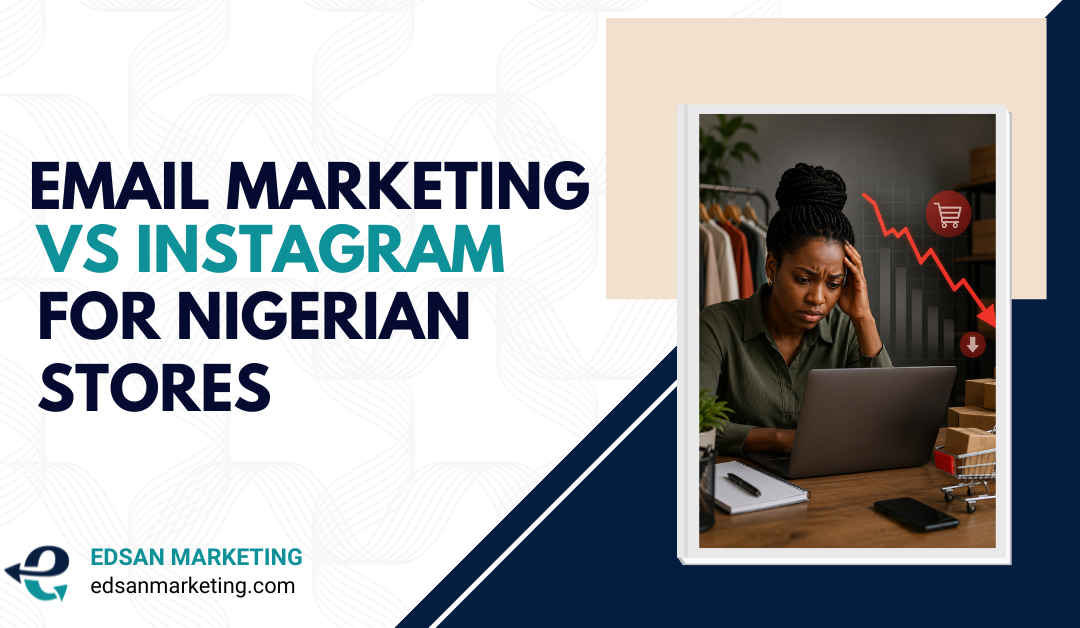
If you sell online in Nigeria, you already know this feeling. Someone lands on your store. They scroll through your photos a little too long for it to be nothing. They read the caption twice.
Maybe they even put something in their cart.
And then something else grabs their attention, or their data finishes, or their baby starts crying, or honestly, who knows. They just leave.
Here’s the part that never stops getting to me, even after years of doing this: there’s nothing the brand can do about it in that moment. No name. No number.
Money was spent that the business really couldn’t spare getting that person to the page, and they walked away for free, with no way to ever speak to them again.
Most founders take it personally. I get it it feels like something you did wrong. But it’s rarely about the product or the content. It’s that the channels doing all the work were never built to let you follow up.
We’re So Good at Getting Attention.
Can we just appreciate, for a second, how creative Nigerian sellers are?
The Reels, the trending sounds, the “abeg no scroll” captions are genuinely gifted at getting eyes on their stuff. Nobody has to teach Nigerian sellers to hustle.
But here’s what most founders don’t realise until it’s too late: Instagram was never really theirs. Every brand I work with is building on land it doesn’t own.
Your followers belong to Instagram. And when it decides to change the rules, restrict an account, throttle reach, a brand finds out in the worst possible way exactly how little control it actually had.
I’ve watched this happen to brand after brand, and I don’t want it to happen to yours.
Email Marketing? SMEs Roll Their Eyes At First. Here’s Why They Shouldn’t.
I’ll be honest with you, almost every business owner I say this to gives me the same look. Email? That’s for big brands abroad, not for a Nigerian store selling bags and skincare on Instagram. I get it.
But stay with me, because it’s not what you’re picturing.
It’s not a boring monthly newsletter nobody opens. Think of it this way: posting on Instagram means putting something out there and hoping the algorithm decides to show it to enough people.
Email is nothing like that. You write the message once, and then it sends itself, to exactly the right person, at exactly the right moment, without asking anyone’s permission first.
Someone kept staring at that same dress? Email quietly asks, “still thinking about it?” Someone filled a cart and vanished? An hour later, an email nudges them: “You left something behind.”
A customer who used to buy from you every month suddenly goes quiet? Email reaches out and says, gently, “We miss you.”
All of that. While you’re asleep. While you’re at the market sourcing stock. While you’re living your life. The system just keeps working.
Let’s Talk About Instagram, Honestly
I still love Instagram. I’m not here to tell you to abandon it. But I need you to see it clearly, because a lot of business owners don’t, until it’s too late.
You post something you’re proud of, and it goes out to a fraction of your followers. Not because they don’t care. Because the algorithm decided they didn’t need to see it that day.
Out of 5,000 followers, maybe a few hundred actually see any single post, if you’re lucky. The rest scroll straight past without ever knowing it existed.
That’s a gut punch every time you realise it. All that work, and most of their own audience never even sees it.
Email doesn’t play that game. When you hit send, it goes to every person on your list. No algorithm quietly deciding who deserves to see it. No paying extra to “boost” your own message to your own customers.
And then there’s the fear that sits at the back of every Nigerian seller’s mind: the Instagram ban.
Accounts get restricted or disabled, sometimes with no explanation at all, and every follower a brand spent months building goes silent overnight.
I’ve watched it happen to people I know, and it’s devastating to watch a business lose everything it built, overnight.
Your email list can’t be taken from you like that. It’s yours. Nobody can switch it off because they changed a policy somewhere in California.
So keep posting on Instagram; it’s still one of the best ways for new people to discover you.
Just don’t mistake it for something that was ever built to be reliable.
It was built to keep people scrolling, not to keep you paid.
What About Just Running More Ads?
I get asked this a lot, so let’s just talk about it directly.
Ads work. I run them for clients constantly: Instagram ads, TikTok, Facebook boosts. They’re genuinely one of the best ways to get new eyes on a store, and I’m not telling anyone to stop.
But ads and email aren’t solving the same problem, and it’s a distinction a lot of founders miss.
Every naira you spend on an ad buys you someone’s attention once. The moment your budget stops, so does the traffic. There’s no residue, no leftover reach sitting there for free. If that person didn’t buy the first time, you’ll probably have to pay again just to get back in front of them.
Email is the opposite. The moment someone joins your list, however they got there, an ad, a referral, a random Instagram comment, you’ve paid for that relationship once. After that, reaching them again costs you almost nothing. You could email that same person ten times over the next year for a fraction of what one more ad would cost.
Ads get people through the door. Email is what happens once they’re actually inside your house.
If you’re pouring money into ads every month with nothing catching the people who don’t buy immediately, you are every single time paying full price for every single sale.
Email is what finally lets you stop doing that. If you want the deeper walkthrough of exactly how this plays out in real revenue, I wrote the full breakdown here: how to increase email revenue
The 3 Emails Every Nigerian Online Store Needs
This is where most brands think it’s complicated, but it really isn’t.
You don’t need 30 emails. You don’t need to write something new every day. You start with three.
1. The Welcome Email
When someone joins your email list, they’re at the peak of their interest in your brand.
This is the moment to say hello, tell your story, and make them feel good about signing up.
A welcome email typically goes out automatically the moment someone subscribes.
It might include a small incentive a discount, free shipping, early access to new collections.
And it sets the tone for everything that follows. Most Nigerian stores skip this entirely.
Their new subscriber signs up and hears nothing for weeks. By then, they’ve forgotten who you are.
2. The Abandoned Cart Email
This one might be the most important of all. Imagine someone spends 15 minutes on your store.
They fall in love with a ₦45,000 bag. They add it to their cart.
And then their phone rings, or NEPA strikes, or they just need to think about it, and they leave.
Without email marketing, that sale is gone forever. With an abandoned cart email, they get a gentle nudge about an hour later:
“You left something behind.” Sometimes that’s all it takes.
The sale comes back. This happens across every kind of product fashion, skincare, home goods, electronics.
People get distracted. They don’t always mean to leave. And a well-timed reminder brings a lot of them back.
3. The Win-Back Email
For customers who bought from you before but haven’t returned in a while, this email says: we noticed you’ve been quiet, and we’d love to see you again.
It’s not pushy. It’s just a reminder that you’re still here, you still care, and there might be something new worth checking out.
A lot of brands focus so hard on finding new customers that they forget about the ones they already have.
But selling to someone who already bought from you once is far easier than convincing a stranger to trust you for the first time.
What Your Customers Are Already Telling You
Here’s something that surprised me when I first got into email marketing: your customers communicate through their actions, not their words.
When someone browses the same product three times, they’re saying “I want this, I’m just not sure yet.”
When someone abandons a cart worth ₦60,000, they’re saying “I was this close.”
When a loyal customer suddenly stops buying for two months, they’re saying “I need a reason to come back.”
Email marketing lets you respond to these signals automatically. You’re not guessing.
You’re listening to what your customers’ behaviour is already telling you and responding with the right message at the right moment.
That’s not just smart marketing.
That’s just good customer service, with a little automation behind it.
“But I Don’t Have Many Subscribers Yet”
I hear this constantly, and I want to be honest with you about it.
You do not need thousands of people to start. You don’t need a beautiful, polished template.
You don’t need any of the things that feel intimidating right now.
What you actually need is smaller than you think. A simple way for people to sign up is a small popup offering 10% off or free delivery is enough.
Your three core emails, written once, run quietly forever after that. And a simple update once a week or two, not spam, just something worth their time from a brand they already said yes to.
Fifty people who actually open your emails is a real start. A hundred is a real list. It grows from there, and it gets stronger the longer you let it run.
Why Now Is Actually the Right Time for Nigerian Brands
Here’s something worth knowing: email marketing in Nigeria is still early.
Most Nigerian ecommerce brands are still entirely dependent on Instagram and WhatsApp.
The brands that build email lists, even small ones, are building an asset their competitors don’t have.
Five years from now, the stores that are thriving will be the ones that have built relationships directly with their customers.
Not just followers. Not just broadcast list contacts.
Actual, owned relationships. The window to be an early mover is open right now.
Want to Know Where Your Store Stands?
At EDSAN Marketing, we offer a free email audit for Nigerian ecommerce brands.
We’ll look at what you currently have set up or what you’re missing entirely and tell you exactly what to fix first for the fastest results.
It takes about 20 minutes, and you’ll walk away with a clear picture of what’s possible.
No pressure, no obligation. Just a clear conversation about your store.
To book your free audit, send an email to info@edsanmarketing.com with the subject line: “I want my free audit.”
We’ll be in touch within 24 hours.